

After the holidays, cutting carbs always seems to come back into style. While it may work for some people, it might not actually effective for others. For most people training consistently, especially those lifting weights or doing higher intensity conditioning, cutting carbs entirely is not only unnecessary and it can actively work against your goals. This shows up all the time across our small group training, personal training, hockey training, and even in active rehab when people are trying to rebuild capacity but feel flat, tired, or stuck.
Carbohydrates are one of the body’s primary fuel sources. When you eat carbs, they are broken down into glucose, which can either be used immediately for energy or stored for later. The body stores carbohydrates in the body as glycogen, mainly in your muscles and liver. Muscle glycogen is especially important because it fuels strength training, sprinting, repeated efforts, and anything that requires intensity. On average, a well fed adult can store roughly 300 to 500 grams of glycogen in their muscles, with another 80 to 100 grams stored in the liver. This stored fuel is what allows you to train with quality, whether that means pushing heavier loads in a small group session, moving well through a personal training workout, or handling repeated high output shifts on the ice.
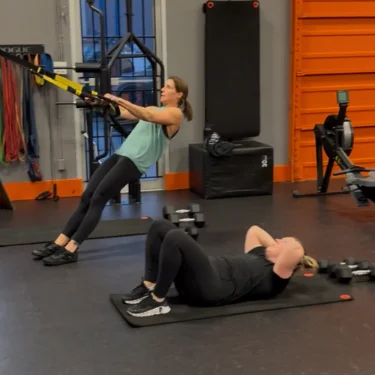
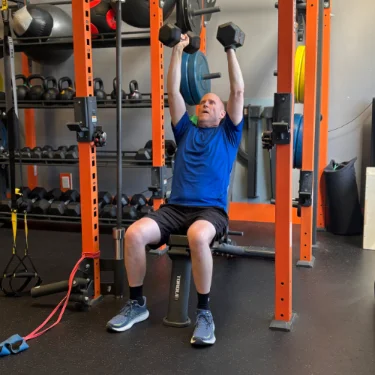
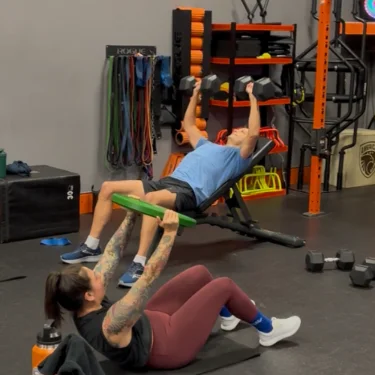
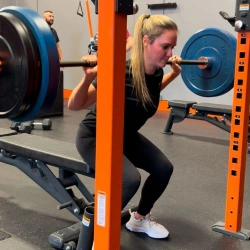
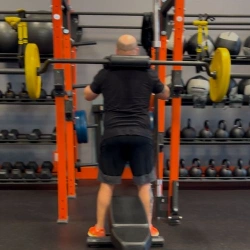
Every hard workout pulls from those glycogen stores. Heavy lifting, circuits, conditioning blocks, and on ice or off ice hockey training all rely heavily on carbohydrates. Even in active rehab, where the goal may be restoring movement quality, strength, and tolerance rather than max intensity, glycogen still matters. Active rehab sessions that include loaded exercise or higher volumes will still draw from the same fuel system. When carbs are not replaced, performance drops, technique breaks down sooner, and recovery between sessions slows. Over time this can look like stalled progress, persistent soreness, poor sleep, and a general sense that training feels harder than it should be.
When most people say they are cutting carbs, what they usually mean is that they are cutting foods like cookies, pastries, chips, and other highly processed snacks. In many cases, reducing those foods is a positive change. The issue is when that mindset extends to all carbohydrates, including fruit, rice, potatoes, and oats, which are foods that directly support training and recovery. We often see this in people starting active rehab or returning to training after time off. They want to clean everything up at once, but end up under fueling the very sessions that are meant to help them feel better and move stronger.
Even foods that people label as bad carbs are not automatically bad in all contexts. For hockey players training hard in the off season or in season, higher carbohydrate intake, including simpler carbs around training, can support repeated efforts, speed, and overall workload tolerance. The same applies to members pushing volume in small group training or personal training three times a week. Context matters. A rest day looks very different from a heavy lower body session or a conditioning focused workout.
Better carbohydrate choices for most people include potatoes, rice, oats, quinoa, fruit, vegetables, and legumes. These foods provide carbohydrates alongside fiber, vitamins, and minerals that support digestion, energy levels, and recovery. Including these consistently often leads to better workouts. Sets feel stronger later in the session, movement stays cleaner, and energy remains more stable across the week. For those in active rehab, this can mean better tolerance to volume and less symptom flare up after sessions. For athletes, it means higher quality work and faster performance improvements.
The goal is not to eat carbs mindlessly or to eliminate them entirely. It is to match carbohydrate intake to your training demands. On harder training days, such as heavy lifts, conditioning blocks, or hockey sessions, carbs play a bigger role. On lighter days or recovery focused sessions, intake can naturally come down. This flexible approach supports performance, body composition, and long term consistency without unnecessary restriction.
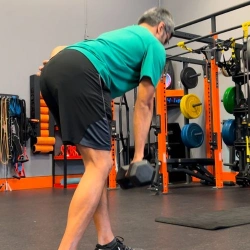
If you are training regularly at AIM Athletic, whether through active rehab, small group training, personal training, or hockey specific programs, carbohydrates are not something to fear. They are a tool that helps your body train harder, recover faster, and adapt more effectively. Choosing higher quality sources most of the time and using carbs to support your training rather than fight against it puts you in the best position to keep moving forward.
You've got the info now it's time to take AIM,




.webp)
















.webp)




.png)







.webp)