
If you follow fitness research long enough, eventually you'll read that someone has discovered another way to supposedly get the same results while doing less work. Why perform three sets when one might work? Why train for an hour when 20 minutes might be enough? The fitness industry has been searching for an easy button for decades, and training to failure has once again found itself in the middle of that conversation. I have written about this topic before, but studies continue to investigate how close we actually need to get to muscular failure to build strength and muscle. More specifically, if you are short on time, could you perform one really hard set to failure and get similar benefits to performing multiple sets while stopping each one with a few repetitions left in the tank?
Before answering that, we need to establish what failure actually means because I think the average gym-goer would be rather generous with the definition. Failure isn't when your muscles start burning. It isn't when something becomes uncomfortable, and it definitely isn't finishing all the reps in your set, putting the weight down and announcing that you couldn't possibly have done one more. True muscular failure means reaching the point where another repetition cannot be completed with acceptable technique. There is a substantial difference between "I really don't want to do another rep" and attempting another rep only to discover that, despite your best efforts, the weight has decided it lives on the ground now.
The alternative is using repetitions in reserve, or RIR. This means if you perform eight repetitions at 2 RIR, you stop at eight even though you probably could have completed ten. At 4 RIR, you might have another four good repetitions available. At 0 RIR, you've reached failure. It's a useful way to prescribe training intensity without requiring every set to become a personal confrontation with your life choices. The catch is that you actually need to know what failure feels like before you can accurately estimate how far away from it you are. Experienced lifters tend to be much better at this. A beginner might finish ten reps, confidently tell me they had one left in the tank, and then somehow perform another five when asked to continue. Apparently, we have discovered six different versions of their final repetition.
This becomes important when looking at studies comparing single versus multiple sets and failure versus RIR. There are favourable results showing that surprisingly small amounts of resistance training can improve strength and muscle mass when the work is sufficiently challenging. That's valuable information of course, but if you only have time for one hard set, doing that set is obviously better than deciding you don't have time for a "proper" workout and doing nothing. Where things get messy is when "this could work" gets turned into "this is all you need."
Training experience matters enormously here as well. Beginners respond incredibly well to resistance training because almost everything is a new experience to them. They are learning movements, improving neurological efficiency and exposing their muscles to levels of mechanical tension they aren't used to. Give a beginner a half-decent resistance training program and get them to consistently follow it and they will probably get stronger. An experienced lifter has a much harder job. After years of training, the body has already adapted to a significant amount of stress, so creating another adaptation requires a progressively greater or different stimulus. A training dose that creates measurable improvement in a beginner might simply maintain what an advanced lifter already has.
Experienced lifters are also much better at actually reaching failure, which isn't necessarily a good thing. Someone taking a 50-pound squat to failure and an experienced lifter taking a 400-pound squat to failure may both technically reach 0 RIR, but those are very different workouts. One person might be ready for their next exercise in two minutes. The other may need a chair, a snack and several moments to reconsider whether having strong legs was ever that important to them.
When we're talking about building muscle, mechanical tension remains one of the biggest pieces of the puzzle. We need to expose muscle to enough tension to give it a reason to adapt, and then accumulate enough training volume over time to continue driving that adaptation. Metabolic stress and muscle damage can accompany hard training, but getting incredibly sore isn't the goal. Not being able to sit on the toilet for three days after squats doesn't necessarily mean you've unlocked some secret level of hypertrophy. Sometimes it just means you haven't trained legs in six months.
This is also where the single-set-to-failure idea can fall apart if we only look at one workout instead of the entire training week. Let's say you normally perform a few sets of biceps twice per week. Instead, you decide one set to failure is more efficient and absolutely destroy your arms on Monday. You curl until nothing moves, throw in some questionable partial reps for good measure and leave feeling extremely accomplished. If you're so sore that your pulling exercises suffer on Wednesday and you don't train your arms properly again for another week, did that one incredibly productive set actually improve your overall training? Maybe not. Your body doesn't care that you won Monday. It cares about the amount of quality training you can consistently accumulate over weeks, months and years.
This is where I think some of the single-set versus multiple-set, high-intensity versus low-intensity and minimum-effective-dose research gets slightly lost once it reaches social media. The research itself is extremely useful. Understanding how little exercise is required to create meaningful adaptation has huge implications for people who are short on time, returning from injury or simply don't want to spend their entire life in the gym. The fitness industry, however, loves an easy button. "One set can work" quickly becomes "you're wasting your time doing three." "Ten minutes of exercise has benefits" becomes "anything longer than ten minutes is pointless." Add an aggressive thumbnail and someone pointing at a graph, and suddenly everything we've done for the last 50 years has apparently been debunked.
I think that misses one of the best parts of exercise. The beauty of training isn't entirely in finding the smallest possible amount of work required to achieve an outcome. It's the process of figuring out what works. It's adding five pounds to something that felt impossible three months ago, changing an exercise and suddenly progressing again, or trying a program that works incredibly well for eight weeks before your body apparently decides it is no longer impressed. Training involves trial and error, and instead of constantly trying to eliminate that process, I think we should seek it out.
The easiest way to think about it is to treat your training like you're conducting a study on yourself. Your program is the methods section. How often are you training? How many sets are you doing? How close are you getting to failure? Are your weights progressing? Are you recovering? Most importantly, are you actually following the program consistently enough to learn anything from it? Then you have your results and discussion. If your goal is weight loss, maybe the scale or your waist circumference is decreasing. If your goal is strength, the weights on the bar should eventually go up. If you're trying to build muscle, your measurements, body composition and performance should reflect that. If you're recovering from an injury, activities that used to bother you should gradually become easier.
Sometimes your experiment will work incredibly well for months and then progress will slow. That's normal, eventually our bodies adapt to repeated stimuli, which is inconvenient because adaptation was the whole reason we started training in the first place. Changing exercises, volume, intensity, frequency or proximity to failure can provide a new challenge while giving you some time away from your previous training stimulus. Later, you may return to something that stopped working and suddenly start progressing with it again. Training is often cyclical, and there doesn't need to be one perfect method that you follow forever.
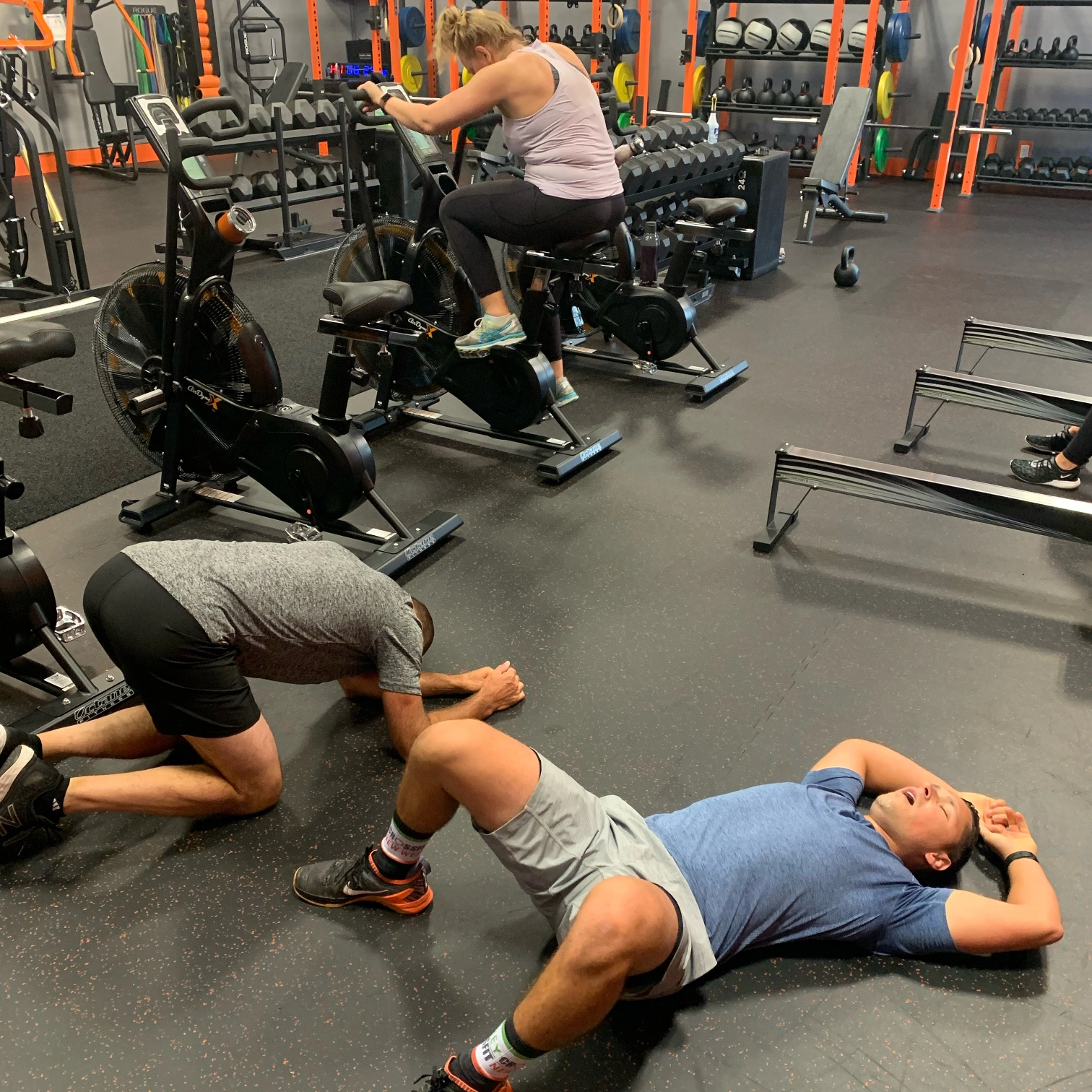
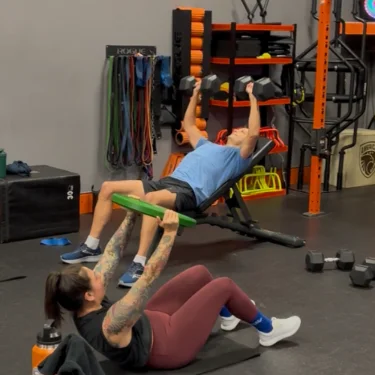
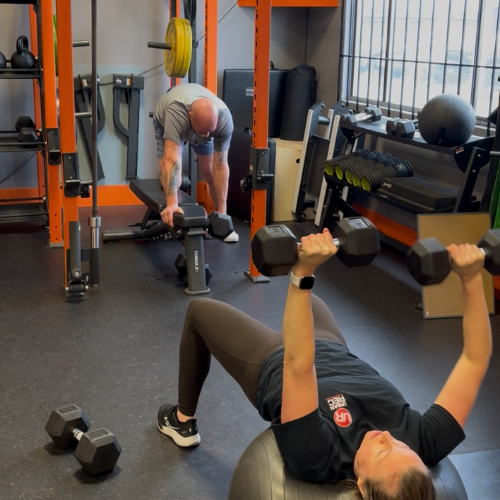
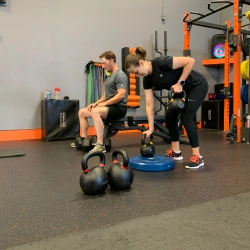
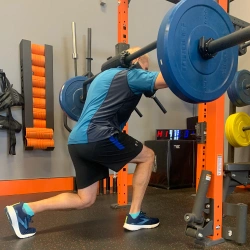
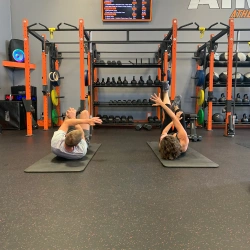
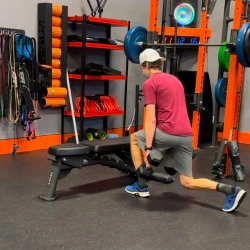
That's a big part of how we approach programming at AIM Athletic. In small group training and personal training, we can manipulate sets, repetitions, loading and RIR based on someone's goals and training experience rather than deciding everyone needs to train the exact same way. In active rehab, creating maximum fatigue usually isn't the objective at all, we need enough stimulus to improve strength and function without creating so much soreness or symptom aggravation that we can't progress. With hockey training, crushing an athlete's legs to failure might produce an excellent leg workout, but if they skate like a newborn giraffe the following day, we probably missed the bigger goal. With youth training, learning how to move well, progressively challenge themselves and understand what appropriate effort feels like is far more valuable than teaching a 12-year-old that every successful workout should end with them lying on the floor.
So, can one set to failure work? Absolutely it can. If all you have time for is one set, I would much rather see you perform one challenging set than skip training because you couldn't fit in the perfect workout. Training to failure can also be a useful tool within a well-designed program. But if taking every set to failure creates so much fatigue that it reduces the amount or quality of training you can perform throughout the rest of the week, your supposedly efficient approach may actually be costing you progress.
At the end of the day, consistently accumulating enough high-quality training is probably much more important than obsessing over whether every set ended at exactly 0, 1 or 2 RIR. Train hard enough to give your body a reason to adapt, recover well enough that you can do it again, and pay attention to what happens over time. Research should help us decide what experiments are worth trying, not create a new set of commandments every time another study gets published. The studies we read might last eight or twelve weeks. Your experiments within your own fitness journey can, and should, last a lifetime.
You've got the info, now it's time to take AIM!

.webp)





.webp)


.png)




.webp)